The AI Cockpit Gap: Why Capital Markets Need a Control Plane, Not Just an Engine
- Carlos Cabana
- 2 days ago
- 6 min read

If you’re running a desk at a bank, a brokerage, or an asset management firm right now, you’ve likely been pitched a dozen "AI engines." These are the Large Language Models (LLMs), the RAG pipelines, and the massive data lakes that promise to automate everything from trade reconciliation to investment research.
The pitch is always the same: "Look how fast this engine can go."
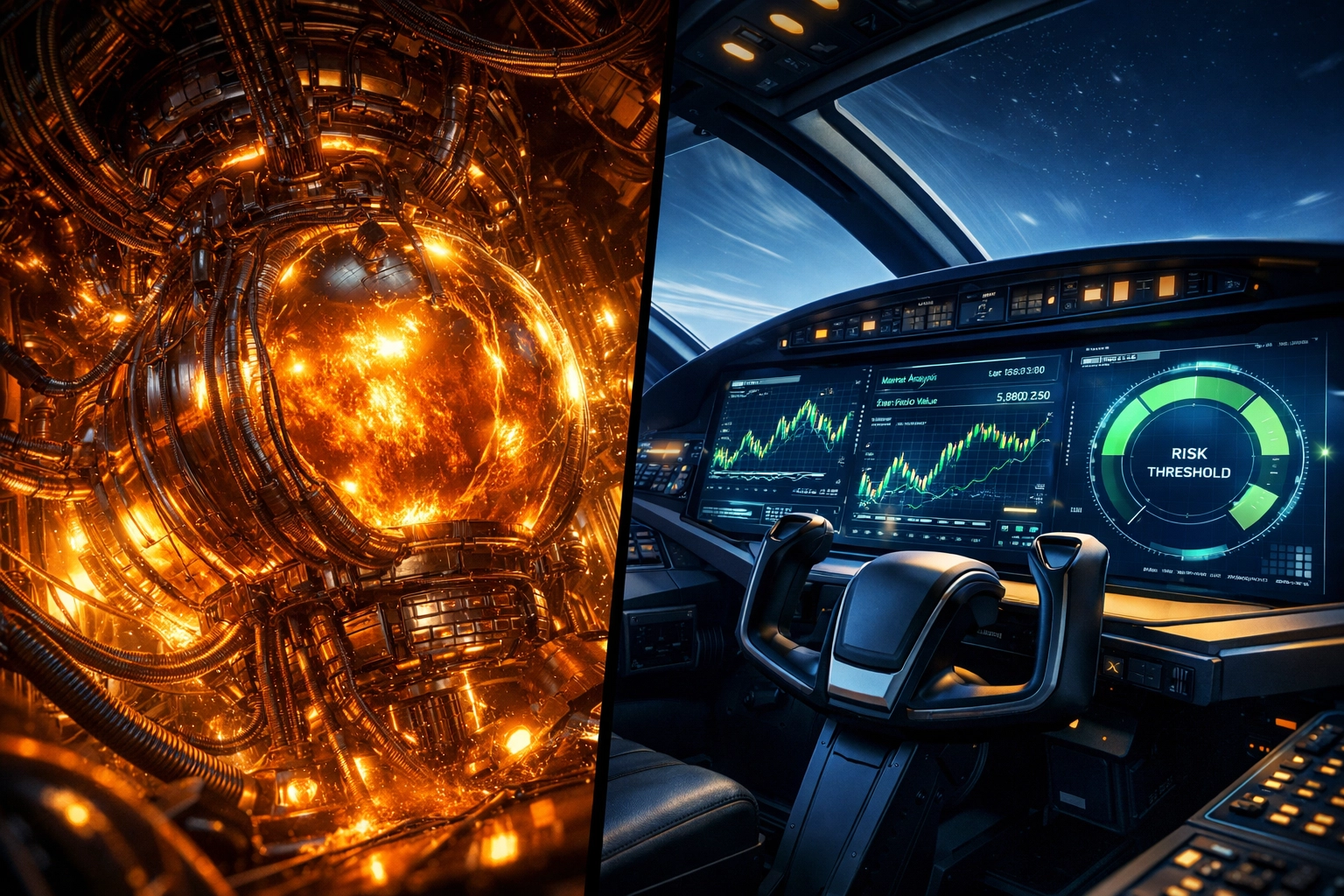
But here is the problem: In the world of Capital Markets, speed without steering is just a high-velocity car crash waiting to happen. Most firms are currently bolting 1,000-horsepower engines into paper-thin chassis with no dashboard, no brakes, and no flight deck.
We call this the AI Cockpit Gap.
It’s the distance between having the raw computational power to generate text and data, and having the institutional control to ensure that output is compliant, explainable, and safe to deploy in a regulated environment.
At QUANTEX, we don't just build engines. We build the AI Control Plane.
The Engine is Easy; The Cockpit is Hard
Let’s be honest: LLMs have become a commodity. Whether you’re using GPT-4, Claude, or a fine-tuned Llama 3, the "engine" is readily available. Any developer with an API key can claim they’ve "integrated AI."
But an engine isn't a vehicle. In a cockpit: specifically an AI Cockpit: you need more than just propulsion. You need:
Visibility: Real-time monitoring of what the AI is thinking and why.
Guardrails: Hard stops that prevent the system from violating SEC/FINRA rules or internal risk limits.
Auditability: A "black box" recorder that stores every decision path for the inevitable regulatory review.
Human-in-the-loop (HITL): A way for operators to take the yoke when the weather gets rough.
Right now, most financial institutions are suffering from "Engine Overload." They have plenty of capability but zero control. This isn't just a technical debt problem; it’s a massive operational liability.
Symptoms of the Gap: Are You Flying Blind?
How do you know if your firm has a Cockpit Gap? Look for these three symptoms:
1. Zero Visibility (The "Black Box" Problem)
If your AI generates a trade recommendation or a risk report, can you explain exactly why it did it? If the answer is "the weights in the neural network converged on this probability," you’ve already lost. In capital markets, "because the model said so" is not a valid compliance defense. Without a control plane, your AI is a black box that provides no insight into its logic.
2. Manual Policy Enforcement ("Babysitting")
If your highly paid analysts or compliance officers spend 50% of their time "checking the AI’s work" to make sure it didn’t make something up, you don't have automation. You have an expensive hobby. A true cockpit automates the policy enforcement. It shouldn't need a human to check if an output is "slop": the system should prevent slop from being generated in the first place.
3. Audit Nightmares
Regulators don’t care about "emergent properties" or "creative intelligence." They care about lineage, data privacy, and rule adherence. If you can’t pull an audit log that shows the specific data inputs, the prompt version, the model parameters, and the human sign-off for a specific AI action, you aren't ready for production.
The Capital Markets Stakes: Trade, Labor, and Rates
The urgency of closing this gap is driven by a shifting macro environment. We aren't in the "easy money" era of 2021 anymore. The current landscape, as highlighted in recent forecasts from institutions like M&T Bank, requires a more disciplined approach to technology.
Trade & Tariffs: With global trade policies and tariff structures shifting overnight, firms need AI that can ingest real-time policy changes and adjust portfolio risk instantly. You can’t wait for a model to be "re-trained." You need a control plane that allows you to inject new "symbolic" rules into the AI’s brain immediately.
Labor Scarcity: We are facing a structural shortage of experienced middle-office and back-office talent. The solution isn't just "more AI"; it’s agentic automation. We need AI agents that act as autonomous operators. But you can't delegate authority to an agent if you don't have a cockpit to monitor its performance.
Debt & Interest Rates: High funding costs mean that capital efficiency is everything. Using probabilistic AI to guess at liquidity needs is a recipe for disaster. You need the precision of Operations Intelligence combined with the flexibility of generative models.
Enter the Governed Brain: Neurosymbolic AI
At QUANTEX, we solve the Cockpit Gap through a framework we call the Governed Brain.
While the rest of the world is obsessed with "Pure Neural" AI (which is great at patterns but terrible at logic), we focus on Neurosymbolic AI. This approach combines the pattern recognition of neural networks (the "Brain") with the hard-coded logic and rules of symbolic AI (the "Governor").
This is the foundation of our Architecture.
By using a Neurosymbolic approach, we ensure 100% explainability. When our system processes a complex transaction for a Broker-Dealer, it doesn't just give an answer. It provides a trace of the rules it followed, the data it accessed, and the compliance constraints it verified.
This is the "Anti-Slop" strategy. "Slop" is the low-quality, hallucination-prone output generated by ungoverned models. In Capital Markets, slop is a fireable offense. Our control plane is designed to filter out the noise and deliver operator-grade intelligence.

The Control Plane: A Decision-Oriented View
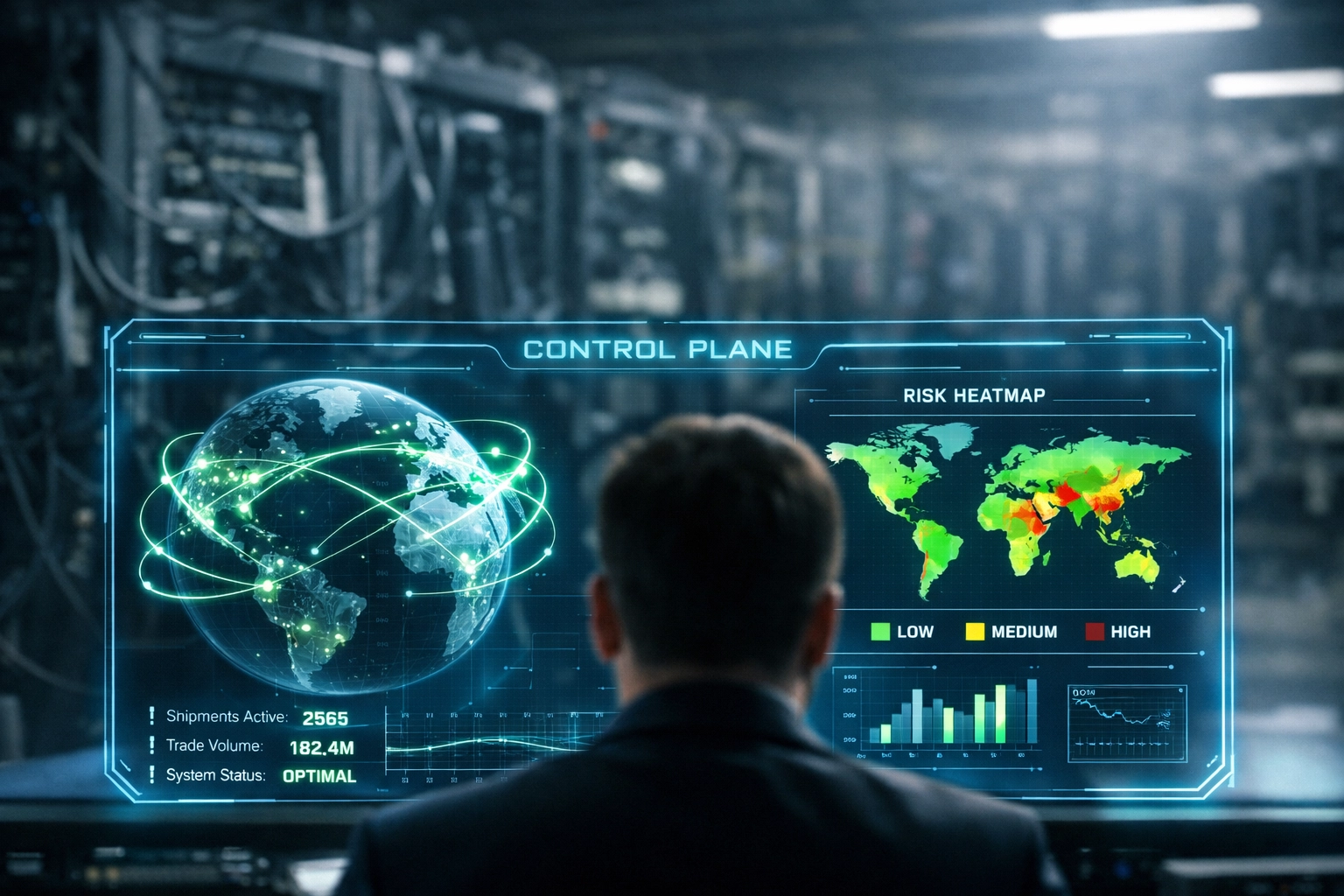
A control plane is not just a dashboard; it’s a management layer. Think of it as the operating system for your AI workforce.
In the QUANTEX ecosystem, the Control Plane handles:
Identity & Access Management (IAM): Ensuring the AI only sees the data it is authorized to see, based on the user's role.
Dynamic Guardrails: Real-time checking of AI outputs against a library of financial regulations (e.g., MiFID II, SEC Rule 15c3-3).
Scenario-Based Risk Framing: Instead of giving one answer, the cockpit allows operators to run "what-if" scenarios across different rate environments or trade configurations.
Version Control: The ability to "roll back" the AI’s logic to a previous state if a new model version starts behaving unexpectedly.
This level of control is what allows a bank to move from "testing AI in a sandbox" to "deploying AI in the core."
Beyond Legacy: Why You Can't Build This Internally
Many Tier-1 banks try to build their own AI control planes. They usually fail. Why? Because they try to build them on top of Legacy Infrastructure.
Trying to manage modern AI agents with 20-year-old middleware is like trying to fly a SpaceX Dragon capsule with a Boeing 747's analog dials. It doesn't work. The latency is too high, the data silos are too deep, and the logic is too fragmented.
QUANTEX provides a cloud-native, API-first control plane that integrates with your existing stack but operates at the speed of modern AI. We provide the API Docs and the architectural blueprint to get you from zero to governed in weeks, not years.
The Productivity Offset
We need to stop treating AI as a "chatbot" and start treating productivity as the product.
When you close the Cockpit Gap, your human staff: your traders, your analysts, your compliance officers: stop being "AI babysitters" and start being "AI Commanders."
This is how you solve the labor scarcity issue. One operator, equipped with a QUANTEX Cockpit, can manage a fleet of AI agents performing tasks that previously required an entire department. This isn't about cutting headcount; it's about increasing the "Force Multiplier" of your best people.
Final Thoughts: The Operator’s Mandate
The era of AI experimentation is over. The era of AI operation has begun.
If your AI strategy is just a list of LLM vendors, you don't have a strategy; you have a shopping list. You need to ask your team the hard questions:
Where is our control plane?
How do we stop the slop?
Can we explain this decision to a regulator in 30 seconds?
If you can’t answer those questions, it’s time to look at the Architecture Whitepaper and see how a Governed Brain can change your trajectory.
Capital Markets don't need more engines. They need better cockpits.
Contact us to learn how we’re building the future of governed AI for Investment Banking and beyond. Or, if you're ready to build with us, consider becoming a Design Partner.
The gap is closing. Don't be on the wrong side of it.
Carlos Cabana CEO & Founder Quantex Technologies Inc. ccabana@quantex-llc.com

Comments